What it smells like
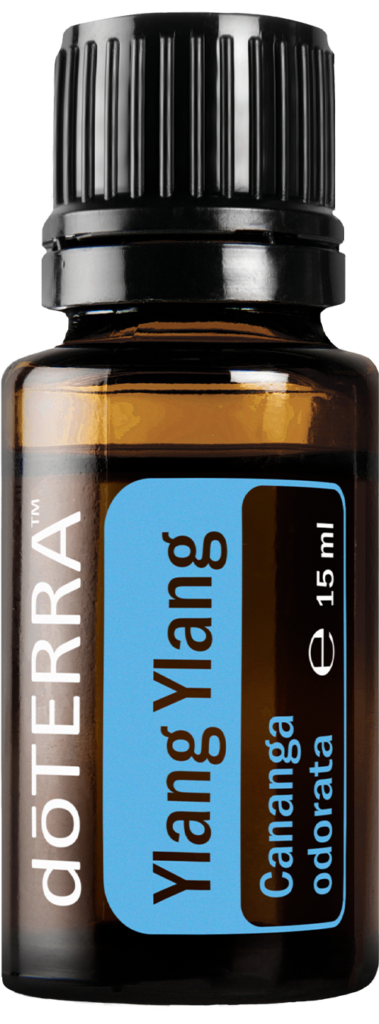
Intensely floral, sweet and slightly banana-like — one of the loudest smells in the range. It is a classic perfumery material and it behaves like one: a little goes an extremely long way, and too much becomes cloying within seconds.
Three things to actually do with it
1. One drop in a diffuser blend, never more
One drop with three of bergamot or wild orange. On its own it takes over a room.
2. A 1 % body oil
Three drops in 10 ml of carrier — and consider two. Ylang ylang is the base of a lot of commercial perfume, so it reads as “perfume” rather than “essential oil” to most noses.
3. A hair oil
Two drops in 10 ml of jojoba through the ends. A traditional cosmetic use, and nothing more is claimed.
What it blends with
Citrus, which cuts the sweetness, and frankincense, which grounds it. It fights with the sharp green oils.
Getting the amount right
In the European range this bottle is supplied for topical and aromatic use and is not labelled as a food flavouring. On skin, 1 % maximum; ylang ylang is a known sensitiser in some people and it is worth patch testing properly. Not photosensitising.
Some people find it gives them a headache at high concentration. That is a reason to use less, not to persist. Full safety notes.
Questions people ask
What do the grades mean?
Ylang ylang is fractionally distilled, and the fractions — often labelled Extra, I, II, III — smell different. The label tells you which fraction you have.
Why does it smell like my grandmother’s perfume?
Because it probably was in it. It is one of the most-used florals in twentieth-century perfumery.
Can I use it on my face?
At 0.5 % and after a patch test, if your skin is happy with it. It is not one of the gentle ones.